Pre-Existing Condition Argument
Insurers claim the structural weakness that caused the collapse pre-dated the policy or the loss event — shifting responsibility to the policyholder. We document the causal timeline to refute this.
Collapse Claims
A roof or building collapse isn't always a single dramatic moment — it's often a process. And when that process is slow, insurers use every opportunity to dispute when damage occurred, whether it's covered, and how much they owe. We know how to fight back.
Collapse claims combine ambiguous policy language, complex structural analysis, and aggressive insurer pushback. Understanding these three dynamics is critical before you file.
The word "collapse" is not uniformly defined across policies. Some require abrupt falling, others cover imminent collapse and structural instability — and state legal precedent fills the gaps differently in Wisconsin and Illinois.
Because collapse is a process, insurers argue that the damage began before the policy period, was a pre-existing condition, or was caused by deferred maintenance rather than a covered event — all grounds for denial.
A roof collapse doesn't just destroy the roof. Water intrusion, structural cascades, damage to contents, and business interruption losses all follow — and insurers scope only the most obvious portion of the loss.
Your policy likely contains specific language defining collapse — and that language, combined with the legal precedent in your state, determines whether your claim succeeds or fails. Some policies say expansion, shrinking, or settling is not collapse. Others say it is, because the instability created by those conditions led to the collapse.
Analyze your policy's collapse definition and state legal precedent
Document the cause and timeline of the collapse
Assess full structural damage — not just what physically fell
Establish and document weight of snow, ice, or other causal loads
Identify and claim secondary water, mold, and interior damage
Inventory damaged contents and personal property beneath the collapse
Track additional living expenses if the property is uninhabitable
Counter pre-existing condition and maintenance exclusion arguments
Fill out the form below and one of our claim specialists will contact you shortly.
We respect your privacy. Your information is never shared or sold.
We are excited to get started and figure out how we can help. Someone will reach out to you to discuss your loss and determine the next steps in how we can assist with your Free Claim Review!
Collapse is one of the claim types where insurers have the most room to maneuver — because coverage depends so heavily on policy language and timing. Here's what they do, and how we respond.
Insurers claim the structural weakness that caused the collapse pre-dated the policy or the loss event — shifting responsibility to the policyholder. We document the causal timeline to refute this.
If there's any sign of wear or aging, insurers call it a maintenance issue rather than a covered collapse. We distinguish between deferred maintenance and a covered peril as the proximate cause.
Many insurers argue that only abrupt, total structural failure qualifies as a covered collapse — excluding imminent collapse, partial failure, or structural instability that led to the event.
Insurers scope only the physically collapsed area — missing water intrusion, interior damage, contents loss, and the full structural cascade that a professional inspection would reveal.
Insurer-approved contractors frequently underbid structural repairs to limit payouts. We obtain independent estimates that reflect the true cost of returning the structure to pre-loss condition.
Rebuilding a collapsed structure often requires compliance with current building codes — a covered cost in most policies that insurers frequently fail to include in their estimates.
Industry Insights
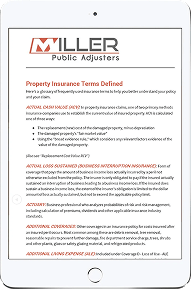
Insurance documents are often filled with confusing jargon. Our free glossary explains important terms in simple, plain language — helping you understand your p…
Download
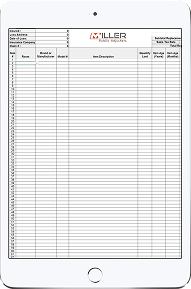
When a fire, tornado, or other covered loss destroys your home, you're expected to list everything you owned -including its age, condition, and value. Our free …

DownloadAdditional living expenses add up fast when severe property damage forces you from your home. Use our free ALE Tracker to identify every eligible expense, recor…
Download
The first six months after a house fire are the most critical - and the most overwhelming. Decisions made during this window will largely determine the settleme…
Download
When fire damages your home, how well you recover hinges entirely on how successfully you settle your homeowners insurance claim. This free guide gives you the …
Download
The larger your loss, the more important it is to be proactive. This free guide teaches you exactly what it takes to get the most out of your homeowners or comm…
Download
Managing your own fire damage insurance claim means documenting everything, staying organized, and arming yourself with the evidence you need to prove the full …
Download
When a fire, storm, or other disaster damages your commercial property, your insurance claim gets complicated -fast. This free Field Guide helps you unravel the…
Download
Understanding buildings — how they're built, how they're damaged, and how they're rebuilt — is foundational to assessing and calculating the full value of a los…
A licensed public adjuster helps you deal with your insurance company and fights for a fair payout. Choose the...

Wondering how to maximize your insurance claim? Explore expert strategies to ensure full compensation and make every step count in achieving what you deserve.
Want the best claim results in Wisconsin? Find out how a public adjuster works tirelessly to guarantee you're compensated fully.
Confused by your insurance terms? Let a WI public adjuster help you make sense of it and ensure you understand every clause today.
What can a public insurance adjuster do for you in Wisconsin? Explore 8 critical problems they handle to ease your claims process.
Want to secure your claim in Wisconsin? Discover how a licensed public adjuster ensures proper documentation and enhances your claims process.
Anxious about your property damage insurance claim? Find out how a WI public adjuster can simplify the experience and assist you during this complex process.
Facing a denied roof claim after a storm? A public adjuster for roof claim can challenge denials and get the settlement you deserve.
Learn the distinct roles of public adjuster vs. independent adjuster. Equip yourself with knowledge to handle insurance claims!
Seeking fair insurance compensation? Discover how public adjuster services enhance your claim and ensure maximum payouts. Partner with us today!
Is your home insurance claim denied for late filing? Learn essential steps to contest and navigate challenges effectively. Take action now!
Is your insurer trying to avoid its contractual obligations? Discover the crucial role of Wisconsin public adjusters in bad faith insurance claims.
You must know exactly what's covered by your insurer to protect your business effectively. Get insights into Wisconsin business insurance here.
It's important to know what your Wisconsin home insurance doesn't cover. Learn about the most common types of property damage claims that are excluded.
Are you uncertain about filing your property damage claim in Wisconsin? Our guide offers expert advice to ensure you receive your rightful compensation..
The role of an insurance appraiser when invoking an appraisal clause is an important aspect of the insurance claim process. Find out more here.
Have you been asked to testify after an insurance claim? The obvious next question is, 'Do insurance companies usually pay out after an EUO?' Find out here.
When comparing actual cash value vs replacement cost in insurance, you must note several key differences. Learn which type of insurance offers better coverage.
See how public adjusters can be your greatest ally in securing top claim settlements. Dive into the unmatched advantages they offer today!
Free Claim Review
Start with a free review — we'll dig into your claim, explain your options, and let you know if and how we can help. No obligation, no pressure.