<img height="1" width="1" style="display:none" src="https://www.facebook.com/tr?id=799173596894770&amp;ev=PageView&amp;noscript=1">
Theft & Vandalism banner

Theft & Vandalism Damage

Theft And Vandalism Claims Live Or Die On Documentation.

When your property is stolen or deliberately damaged, your insurer's payout is only as good as your proof. Without a thorough inventory, accurate valuations, and a complete damage assessment, you'll collect far less than you're owed. We build that case for you.

Coverage Basics

What Theft & Vandalism Policies Typically Cover — And What They Don't

Most homeowner and commercial property policies cover theft and vandalism as standard perils — but coverage limits, exclusions, and documentation requirements vary significantly. Knowing what your policy actually says is the foundation of any successful claim.

Generally Covered

  • Stolen personal property and contents
  • Stolen business equipment and inventory
  • Damage caused by forced entry — broken doors, windows, locks
  • Graffiti, deliberate breakage, and malicious damage
  • Vandalism to a vacant property (with conditions)
  • Business interruption losses after a commercial theft
  • Secondary damage caused by vandalism

Common Exclusions & Limits

  • Theft by household members or employees (often excluded)
  • Cash, jewelry, and valuables above scheduled limits
  • Vehicles and vehicle contents (separate auto policy)
  • Items stolen from an unlocked or unattended space
  • Property stolen during a period of vacancy (beyond policy limit)
  • Theft without visible signs of forced entry (disputed)
  • Business property stolen off-premises (check your policy)
Why Documentation Wins

Theft Claims Are Built On Proof — Not Your Word

Unlike fire or water damage where the loss is physically visible, theft requires you to prove what existed before it was taken. Your insurer will not simply take your word for it — and without solid documentation, your payout will reflect their skepticism, not your actual loss.

  • Complete Inventory

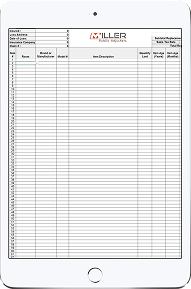
    Every item taken — with description, make, model, serial number, and estimated value — forms the foundation of the claim.

  • Accurate Valuation

    Replacement cost vs. actual cash value changes your payout significantly. We establish what you're entitled to under your specific policy.

  • Proof Of Ownership

    Receipts, photos, credit card statements, and appraisals all serve as ownership proof. We know what documentation works and what to build when records don't exist.

  • Police Report Integration

    A filed police report is required for virtually every theft claim. We ensure the report and the claim are consistent and complete.

HOW WE HELP

How We Build Your Theft & Vandalism Claim

  • Build a complete, itemized inventory of all stolen or damaged property

  • Establish accurate replacement cost or ACV for every item

  • Gather proof of ownership — receipts, photos, statements, appraisals

  • Analyze your policy for applicable limits, sub-limits, and exclusions

  • Inspect and document all structural and secondary vandalism damage

  • Claim commercial equipment, inventory, and business interruption losses

  • Track additional living expenses if displacement results from the loss

  • Negotiate directly with your insurer through final settlement

ACV vs. replacement cost — the single biggest factor in your payout

If your policy pays at actual cash value, your insurer will depreciate every stolen or damaged item based on age and condition — meaning a 5-year-old laptop worth $1,200 new might be valued at $300. A replacement cost value policy pays what it costs to replace the item today. We analyze your policy, fight excessive depreciation, and ensure you receive what your coverage actually promises.

KNOW THEIR PLAYBOOK

How Insurers Minimize Theft & Vandalism Claims

Theft and vandalism claims give insurers significant leverage because the burden of proof rests with the policyholder. Here's how they use that leverage — and how we respond.

  • Requiring proof you can't provide

    Insurers demand receipts, serial numbers, or purchase records for items most people don't document. We build alternative proof through bank records, photos, comparable listings, and expert valuation.

  • Aggressive depreciation on ACV claims

    Every stolen item gets depreciated to a fraction of its replacement value. We challenge excessive depreciation schedules and ensure RCV provisions are applied where your policy entitles you to them.

  • Questioning the legitimacy of the claim

    On theft claims, insurers sometimes suggest the loss was staged or exaggerated — particularly on high-value claims. We document the event thoroughly and ensure your claim is bulletproof from the start.

  • Missing structural & secondary damage

    Vandalism often causes damage well beyond what's immediately visible — structural breaches, water intrusion through broken windows, and secondary losses. Insurers scope only the surface. We find everything.

  • Disputing your item inventory

    Insurers challenge the quantity, condition, or value of items on your loss list. We build a defensible inventory using every available source of documentation and fight item-by-item disputes on your behalf.

  • Undercounting commercial & BI losses

    Commercial theft claims involve equipment, inventory, and business interruption that insurers routinely undervalue. We document the full scope of business impact and fight for a complete commercial settlement.

TYPES OF CLAIMS WE HANDLE

Every Type Of Theft & Vandalism Loss

From residential burglaries to commercial vandalism, we handle theft and vandalism claims of every type and scale across Wisconsin and Illinois.

  • Residential burglary

    Home break-ins are the most common theft claim. We build a complete inventory, establish replacement values, and fight for every item — including those insurers try to exclude or depreciate heavily.

    Generally Covered
  • Commercial theft

    Business theft involves equipment, inventory, cash, and business interruption losses. Commercial policies are complex — we navigate every provision to ensure the full scope of your commercial loss is claimed.

    Including Business Interruption
  • Vandalism & malicious damage

    Graffiti, deliberate breakage, destruction of property — vandalism can cause significant structural and cosmetic damage. We document the full scope and fight for complete restoration coverage.

    Generally Covered
  • Rental property theft & vandalism

    Tenant-caused damage and theft from rental units requires navigating landlord policy provisions carefully. We handle the documentation, the claim, and the negotiation — including lost rental income where applicable.

    Policy-Dependent — We Assess Yours
  • High-value items & scheduled property

    Jewelry, art, electronics, and collectibles are often subject to sub-limits or require separate scheduling to be fully covered. We analyze your policy and fight for maximum recovery on high-value losses.

    Sub-Limits Often Apply
  • Vacant property vandalism

    Vandalism to vacant properties is covered in many policies — but vacancy clauses can limit or exclude coverage if the property has been empty beyond a set period. We know the limits and work within them.

    Vacancy Clauses Frequently Invoked
AFTER A THEFT OR VANDALISM EVENT

What To Do — And What To Avoid

What you do in the hours immediately after discovering theft or vandalism directly shapes your claim. Here's Miller's guidance.

DO THIS FIRST

  • Call the police immediately and file a report — get a copy
  • Photograph and video all damage and every area of the scene
  • Report the loss to your insurer promptly — get a claim number
  • Begin creating a detailed list of everything stolen or damaged
  • Gather any receipts, photos, bank statements, or appraisals you have
  • Secure the property — board windows, change locks — and document costs
  • Check serial numbers on remaining items to confirm what was taken
  • Call Miller before signing any settlement or proof of loss

AVOID THESE MISTAKES

  • Don't clean up or make repairs before documenting everything thoroughly
  • Don't assume your insurer's inventory is complete — verify every item
  • Don't accept ACV if your policy entitles you to replacement cost
  • Don't forget to include forced-entry damage — broken locks, doors, windows
  • Don't miss secondary damage from vandalism — water intrusion, structural
  • Don't sign a proof of loss before your inventory is complete and verified
  • Don't assume a lack of receipts means you can't recover full value

Industry Insights

Get Our Latest Blog Updates

View all Resources
MPpa_Claim_bgimage MPpa_Claim_bgimage_mobile

Free Claim Review

Don’t Fight Your
Insurance Company Alone.

Start with a free review — we'll dig into your claim, explain your options, and let you know if and how we can help. No obligation, no pressure.

Free Claim Review