<img height="1" width="1" style="display:none" src="https://www.facebook.com/tr?id=799173596894770&amp;ev=PageView&amp;noscript=1">
wind-damage-banner

Wind damage

Wind Damage Is Obvious. What Insurers Miss Isn't.

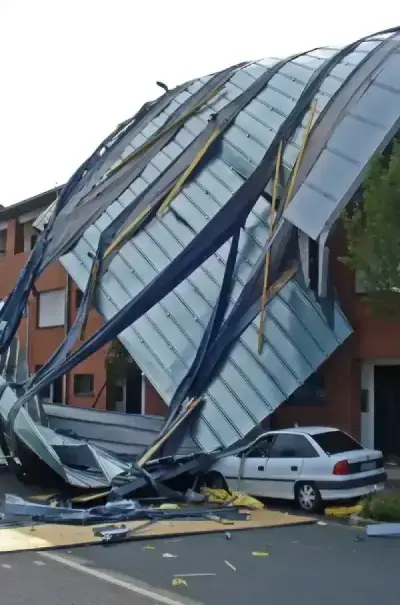
High winds tear off roofs, shred siding, and send debris through windows — but the secondary damage that follows is where most of the claim value hides. We inspect everything, document it all, and fight for every dollar your policy covers.

Beyond the obvious

Wind Damages More Than What You See From The Ground

A thorough post-storm inspection means getting on the roof, examining every exterior surface, and tracing every point of water intrusion that opened up when the wind hit. Insurers do a quick walk — we do a complete inspection. 

  1. 01

    Roof — shingles, flashing & decking

    Wind lifts shingles and tears flashing at edges and penetrations. Even when a roof looks intact from the ground, lifted shingles compromise waterproofing and decking damage beneath is rarely visible without proper inspection.

    Partial lift routinely missed by insurers
  2. 02

    Siding, soffit & fascia

    High winds peel siding panels, crack soffit, and tear off fascia — opening the building envelope to water intrusion. Insurers frequently undercount linear footage and overlook matching requirements on partial replacements.

    Match & replace frequently disputed
  3. 03

    Fallen trees & debris impact

    Trees and large debris landing on structures cause concentrated structural damage that cascades through multiple building systems. Full scope requires a structural assessment — not just surface repair estimates.

    Structural cascade routinely underscoped
  4. 04

    Secondary water intrusion

    Every breach in the building envelope created by wind becomes a water entry point. Interior damage to ceilings, walls, flooring, and insulation is a direct consequence of the wind event — and fully claimable as part of it.

    Routinely skipped by insurers
  5. 05

    Windows, doors & garage doors

    Wind-driven debris shatters glass and warps frames. Damaged windows and doors are significant water entry points with substantial replacement costs that insurers routinely undervalue in their initial estimates.

    Frame damage often undervalued
  6. 06

    Commercial: equipment & BI losses

    Wind damage to a commercial building disrupts operations. Rooftop HVAC, signage, equipment, inventory, and business interruption are all claimable losses that insurers consistently undercount on commercial claims.

    BI losses often excluded or capped
What We Do

How We Build Your Water Damage Claim

  • Full inspection — roof, siding, soffit, windows, structure, and interior

  • Document all damage with detailed photography before any repairs begin

  • Tie all secondary water intrusion directly back to the wind event

  • Assess the full structural impact of fallen trees or wind-driven debris

  • Fight for full replacement where patching is inadequate or mismatched

  • Obtain independent contractor estimates to counter insurer lowballs

  • Claim business interruption and commercial losses in full

  • Negotiate directly with your insurer through final settlement

Wind damage vs. water damage — an important distinction

Standard homeowner and commercial property policies cover wind damage. Water that enters through a wind-created opening — broken windows, lifted shingles, torn siding — is part of the wind claim. Insurers routinely try to split this into a separate water loss to limit the scope of what they pay. We document the causal chain from wind event to water damage and fight that separation at every step.

KNOW THEIR PLAYBOOK

How Insurers Minimize Wind Damage Claims

Wind claims face a consistent set of insurer tactics — from pre-existing wear arguments to separating water damage from the storm event. Here's what we counter every time.

  • Blaming pre-existing wear

    Insurers argue that aging shingles or worn siding would have failed anyway — attributing the damage to maintenance neglect rather than the wind event. We establish the storm as the proximate cause with weather data and inspection documentation.

  • Separating wind from water damage

    Water that enters through a wind-created opening is a wind damage loss. Insurers try to split it into a separate, lower-priority claim. We document the causal chain and fight the separation at every step.

  • Repair over replace

    Patching wind-damaged sections of roof or replacing only a portion of siding rather than the full surface — even when matching is impossible. We establish when full replacement is warranted and hold that position through negotiation.

  • Low structural estimates

    Tree impact and severe wind events cause structural damage that generic repair estimates routinely undervalue. We bring in structural experts to document the full scope and the true cost of restoring your property.

  • ACV instead of replacement cost

    Settling at depreciated actual cash value rather than full replacement cost is a standard tactic on wind claims. We enforce your policy's RCV provisions and ensure you receive what you're entitled to once repairs are completed.

  • Undercounting commercial BI losses

    Business interruption coverage requires accurate revenue documentation and a realistic restoration timeline. Insurers lowball both. We fight for an accurate, complete business interruption claim on every commercial wind loss.

Types Of Wind Events We Handle

Every Kind Of Wind Damage — Every Size Of Claim

From a single downed tree to a widespread derecho event, we handle wind damage claims of every type and scale across Wisconsin and Illinois.

  • Tornado & Funnel Damage

    Tornadoes are a fully covered wind peril. Even near-miss events generate destructive outflow winds that cause significant structural damage well beyond the visible damage path.

    Covered Wind Peril
  • Derecho & Straight-Line Winds

    Derechos produce widespread, fast-moving wind damage across entire regions simultaneously — straining insurer resources and increasing pressure to underpay every individual claim in the swath.

    Covered — High-Volume Events
  • Severe Thunderstorm Winds

    Thunderstorm outflows and microbursts produce localized but intense wind damage. After widespread storm events, insurer inspections are rushed — and incomplete inspections produce incomplete settlements.

    Covered — Often Underinspected
  • Tree & Debris Impact

    Trees felled by wind events are a covered loss when they impact insured structures. Full scope must include structural, interior, and systems damage — not just tree removal and surface patching.

    Full Scope Often Underestimated
  • Winter Storm Wind Damage

    Winter storms combine high winds, ice loading, and freezing temperatures — causing roof damage, structural stress, and ice dam formation simultaneously. Each component requires its own documentation and claim strategy.

    Multi-Cause — Complex To Scope
  • Commercial Wind Losses

    Commercial wind claims include the building, rooftop equipment, inventory, and business interruption losses. The complexity of commercial policies requires expertise most general adjusters simply don't bring to the table.

    Including Business Interruption
AFTER A WIND EVENT

What To Do — And What To Avoid

The actions you take immediately after a windstorm set the foundation of your claim. Here's Miller's guidance.

Do This

  • Report your loss to your insurer promptly — get a claim number
  • Photograph and video all damage before any cleanup or repairs
  • Tarp, board, and secure the property to prevent further damage
  • Document all mitigation steps and their costs in writing
  • Get multiple independent contractor estimates
  • Have your full exterior professionally inspected — not just the roof
  • Track all additional living expenses if you're displaced
  • Call Miller before signing any settlement document or release

Avoid These Mistakes

  • Don't accept a settlement without a full, independent inspection first
  • Don't let contractors begin work before damage is fully documented
  • Don't accept "pre-existing wear" as the cause without pushing back
  • Don't let your insurer treat secondary water damage as a separate claim
  • Don't sign a contractor's assignment of benefits without understanding it
  • Don't ignore water symptoms that appear weeks later — still claimable
  • Don't assume a patch repair is adequate — full replacement may be warranted

Industry Insights

Get Our Latest Blog Updates

View all Resources
MPpa_Claim_bgimage MPpa_Claim_bgimage_mobile

Free Claim Review

Don’t Fight Your
Insurance Company Alone.

Start with a free review — we'll dig into your claim, explain your options, and let you know if and how we can help. No obligation, no pressure.

Free Claim Review