
Why Do Insurance Settlement Negotiations Feel So Overwhelming?
Property damage to your home is stressful enough on its own. When you then have to negotiate an insurance settlement with your insurance company, the process can feel like a second disaster.
Between policy language you have never read, repair estimates that do not match, and timelines that keep shifting, many homeowners find themselves overwhelmed before they even respond to a first insurance settlement offer.
This article breaks down the specific pressure points that make insurance settlement negotiations so difficult for property damage policyholders. Miller Public Adjusters helps property owners navigate these exact challenges every day, and understanding where the process breaks down is the first step toward protecting what your policy promises.
You will learn why insurer tactics, confusing paperwork, and time constraints combine to put you at a disadvantage, and what you can do to take back control of your claim.
Key Takeaways: Why Insurance Settlement Talks Feel Overwhelming
-
Insurance settlement negotiations involve complex policy language most property owners have never encountered before filing a claim.
-
Insurers have experienced claims teams, while you may be navigating the process for the first time.
-
Delays, document requests, and shifting timelines create confusion that can lead to accepting less than you deserve.
-
Miller Public Adjusters levels the playing field by managing negotiations, paperwork, and communication on your behalf.
-
Understanding the pressure points of the settlement process helps you make informed decisions about your claim.
What Are Insurance Settlement Negotiations for Property Damage?
Insurance settlement negotiations are the back-and-forth discussions between you and your insurer over the scope and how much your property damage claim is worth. Your insurance policy is a legally binding contract, and both you and your insurer have obligations under its terms.
After you file a claim, the insurer assigns an insurance adjuster to inspect the damage and prepare an estimate. That estimate becomes the insurer's opening position and undisputed amount. From there, you can accept the offer, counter with your own documentation, or invoke your policy's appraisal clause if both sides cannot agree on the amount of loss.
The negotiation process sounds straightforward, but in practice, it is anything but. The insurer's adjuster works for the insurance company. Your interests and theirs do not always align.
This is where an insurance settlement negotiation can become difficult for a homeowner: you are being asked to evaluate the insurer's estimate, understand your policy, document additional damage, and determine whether the settlement offer accurately reflects your loss.
Why Does Insurance Policy Language Create Confusion During Settlement Talks?
Your insurance policy is a dense legal document filled with terms like actual cash value (ACV), replacement cost value (RCV), and recoverable depreciation. Most property owners have never read their full policy before a loss occurs.
When negotiations begin, insurers reference these terms as though everyone understands them. If you do not know the difference between ACV and RCV, you may accept a payout based on depreciated value without realizing that, depending on your policy, you may be able to recover the withheld depreciation once repairs are completed.
Policy exclusions and endorsements add another layer of complexity. Insurers may cite specific clauses to deny or reduce portions of your claim, and unless you can read and interpret those clauses yourself, you are at a clear disadvantage.
Understanding the terminology in your policy can make it easier to understand why your insurance company is offering a particular settlement amount and where you may need additional documentation or clarification.
How Do Insurance Company Tactics Add Pressure to the Claims Process?
Insurance companies have been processing homeowners claims every day for decades. They have dedicated teams of adjusters, estimators, engineers, and consultants whose job is to evaluate losses and manage payouts. You, on the other hand, may be filing your first claim.
That experience gap creates a significant imbalance. J.D Power’s 2025 U.S. Property Claims Satisfaction Study found that the average time from first notice of loss to final payment had climbed past 44 days, the longest since the study began in 2008.
During that time, you may face repeated requests for documentation, shifting deadlines, and long periods without updates. The longer the process takes, the more difficult it can become for a property owner who is waiting on repairs, dealing with temporary housing, loss of income, or simply trying to move forward after a loss.
Understanding that these delays and requests can be part of the claims process can help you avoid feeling pressured to accept an insurance settlement offer simply because you want the claim to be over.
What Role Does Documentation Play in Insurance Settlement Negotiations?
Strong documentation is the foundation of every successful property damage claim. Photographs, repair estimates, receipts, and a detailed proof of loss form are all essential to proving the full extent of your damages.
Many homeowners underestimate how much evidence is needed. If your estimate does not include a line-item breakdown of every damaged component, the insurer's adjuster may overlook or exclude portions of the loss. Incomplete documentation gives the insurer room to reduce your payout.
The documentation burden falls on you. Your insurer is not going to build the case for a higher settlement on your behalf. Every missing receipt, every uncaptured photo, and every unclear estimate weakens your negotiating position.
The more complete your documentation is, the easier it is to identify differences between your estimate and the insurance company's estimate. This can give you a clearer foundation for negotiating an insurance settlement
How Do Emotional Stress and Time Constraints Affect Your Settlement Decisions?
Filing a property damage claim often happens during one of the most difficult periods of your life. If you are dealing with fire, water, or storm damage, you may be displaced from your home, paying for temporary housing, and managing additional living expenses that strain your budget. For Wisconsin homeowners and business owners, that damage often comes from hail, windstorms, ice dams, and frozen pipes.
That emotional weight has a direct impact on your ability to negotiate effectively. When you need repairs finished quickly and want the disruption to end, accepting a first offer becomes tempting. The pressure to get back to normal can make it difficult to take the time needed to review an insurance settlement offer carefully.
The pressure to settle quickly often conflicts with the time it takes to document your full loss, gather contractor estimates, and challenge an inadequate offer. Taking the time to understand what your policy covers and whether the settlement reflects the full scope of your damage can help you make a more informed decision.
How a Public Adjuster Reduces the Burden of Settlement Negotiations
A licensed public adjuster works exclusively for you. Unlike the insurer's adjuster, a public adjuster has no financial incentive to minimize your claim. Their role is to document your loss, prepare a thorough estimate, and negotiate directly with your insurance company on your behalf. Public adjusters are typically paid a percentage of the settlement, and that fee is set out in a written contract before any work begins.
Miller Public Adjusters handles communication with the insurer, manages the paperwork, and builds the kind of detailed, line-item estimates that hold up under scrutiny. This means you donot have to interpret policy language, respond to adjuster requests, or track deadlines on your own.
The result is a more organized claim, supported by evidence that accurately reflects the full scope of your loss. For homeowners who feel outmatched by the insurance process, professional public adjuster representation can shift the balance back in your favor.
What Steps Can Policyholders Take to Prepare for Settlement Talks?
Preparation is your most effective tool before entering any insurance settlement negotiation. Start by reading your full insurance policy so you understand what is covered, what is excluded, and what your obligations are after a loss.
Document everything from the moment damage occurs. Take photos and video before any cleanup or temporary repairs begin. Make reasonable temporary repairs, such as tarping a damaged roof or shutting off water, to prevent further damage, and keep those receipts as well. Keep every receipt related to the loss, including costs for temporary housing, meals, and transportation if you are displaced.
Get your own repair estimate from a contractor you trust, separate from the insurer's estimate. Having an independent assessment of your damages gives you a concrete starting point for negotiations and identifies gaps in the insurer's evaluation.
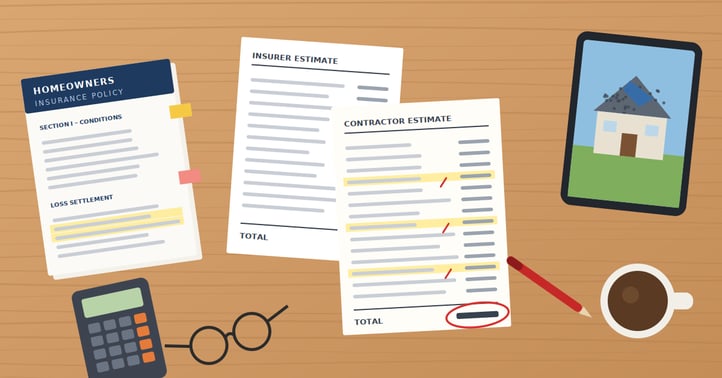
If you disagree with the insurance company's estimate, compare the two estimates line by line. Look for differences in materials, quantities, labor, repairs that were omitted, or damage that was not included.
In Conclusion: Taking Control of Your Insurance Settlement Negotiation
Insurance settlement negotiations feel overwhelming because the process is designed around the insurer's expertise, not yours. Complex policy language, experienced claims teams, documentation requirements, emotional strain, and long timelines all work against homeowners who try to navigate the process alone.
You do not have to accept that disadvantage. Understanding where the process creates pressure points puts you in a stronger position. And if the stakes are too high to go it alone, a public adjuster can step in to manage your claim and pursue the settlement your policy promises.
Whether you handle the negotiation yourself or work with a public adjuster, the goal is the same: make sure your insurance settlement is based on the full scope of your covered property damage and the terms of your policy.
If you are dealing with property damage in Wisconsin or any of the other states where we are licensed, you do not have to sort through the claim on your own. Miller Public Adjusters offers afree claim review: we will look at your policy, your damage, and any offer you have received, and give you a straight answer about whether we can help. Call us at 920-221-1941 or fill out a Free Claim Review to get started.
FAQs About Why Insurance Settlement Talks Feel Overwhelming
Why do insurance companies take so long to settle property damage claims?
Insurers manage large volumes of claims and often require extensive documentation before approving payments. Lengthy repair cycle times, multiple inspection rounds, and internal review processes all contribute to delays that can extend well beyond a month.
Can I negotiate my insurance settlement offer without a public adjuster?
Yes, you can negotiate on your own by documenting damages thoroughly, getting independent repair estimates, and reviewing your policy terms. However, most homeowners lack the claims experience needed to match the insurer's knowledge of the process.
Should I accept the first insurance settlement offer?
You do not have to automatically accept the first settlement offer. Before accepting an offer, review the estimate carefully and compare it with your documented damage, contractor estimates, policy coverage, and any additional costs related to the loss. If you believe the offer does not account for the full scope of your covered damage, you can provide additional documentation and negotiate with the insurer.
What should I do if my contractor's estimate is higher than the insurance estimate?
Start by comparing the two estimates line by line. Differences may involve the scope of repairs, materials, labor, quantities, or damage that was not included in the insurance company's estimate. Providing the insurer with additional documentation and an itemized estimate can help identify and address those differences.
What happens if I disagree with my insurance company's settlement amount?
If you disagree with the amount offered, you can review your policy, document the differences between your estimate and the insurer's estimate, and provide additional information supporting your position. Depending on the policy and the circumstances of the claim, other options may also be available, including an appraisal clause.
How does Miller Public Adjusters help with insurance settlement negotiations?
Miller Public Adjusters manages the claims process on your behalf. From documenting damages and preparing line-item estimates to negotiating directly with your insurer, our team handles communication with your insurer so you can focus on recovery.
What is a proof of loss, and why does it matter in settlement talks?
A proof of loss is your sworn statement of the total amount you are claiming. Miller Public Adjusters prepares this document with detailed, line-item estimates that accurately reflect the full scope of your property damage, strengthening your negotiating position. Many policies set a deadline for submitting a proof of loss once the insurer requests it, so do not let that date pass.
What should I do immediately after property damage to protect my claim?
Notify your insurance company right away, then document all damage with photos and video before any cleanup begins. Miller Public Adjusters recommends keeping every receipt for out-of-pocket expenses, making reasonable temporary repairs to prevent further damage, and holding off on permanent repairs until your claim is fully assessed.
How can I prepare for an insurance settlement negotiation?
Start by reviewing your policy, documenting the damage, keeping receipts and other records, and obtaining a detailed repair estimate. Having organized documentation makes it easier to understand the insurance company's offer and identify areas where the estimate may not reflect the full scope of your loss.

David Miller, Founder of Miller Public Adjusters
David Miller here. After fighting insurers post-fire, I founded Miller Public Adjusters to help policyholders like you. Ask me anything!